
Sep 14, 2026News & Insights
IEC 61032 Test Probes Guide: A, B, C, D and Accessibility Probes
Learn about IEC 61032 test probes including A, B, C, D, 18, 19, 31, 32 and 41. Explore probe differences, applications, and selection tips for electrical safety and IP testing.
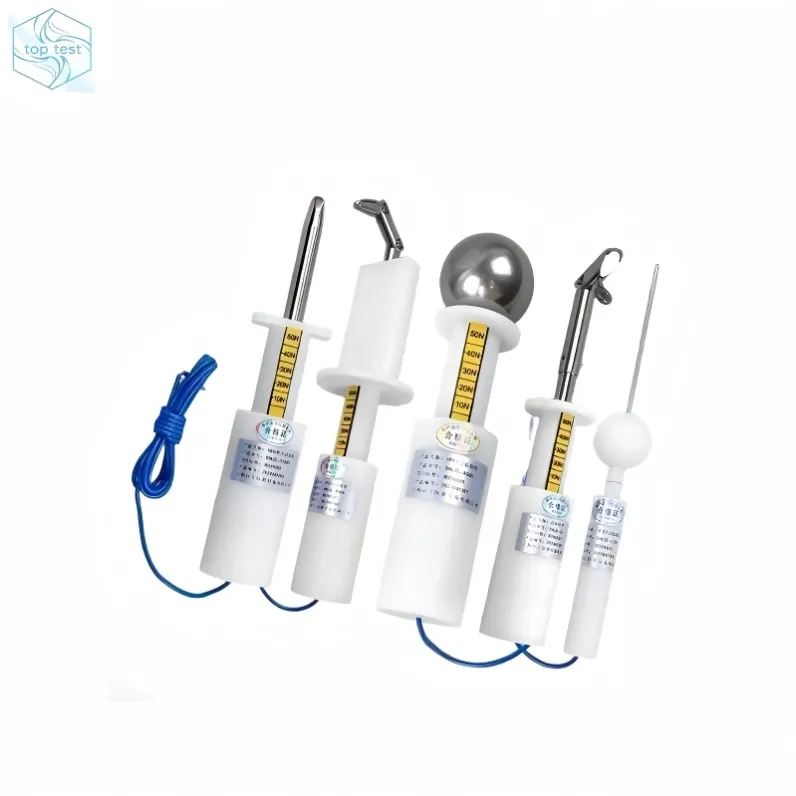
IEC 61032 Test Probes: Complete Guide to A, B, C, D and Other Accessibility Probes
Introduction
IEC 61032 test probes are standardized tools used in electrical safety testing to verify whether hazardous parts inside electrical equipment can be accessed and whether enclosures provide adequate protection.
These probes simulate different access conditions, including the back of a hand, human fingers, tools, wires, and solid objects. Among them, IEC 61032 Test Probe A, B, C, and D are the most commonly used accessibility probes, while additional probes such as 11, 18, 19, 31, 32, and 41 are designed for specific safety applications.
Understanding the differences between IEC 61032 test probes helps manufacturers, laboratories, and engineers select the correct equipment for accessibility testing, enclosure protection verification, and IP testing.
What Is IEC 61032?
IEC 61032 is an international standard titled:
“Protection of persons and equipment by enclosures – Probes for verification.”
The standard defines test probes used to evaluate:
- Protection against access to hazardous parts;
- Protection against solid foreign objects;
- Accessibility of mechanical hazards;
- Other safety requirements referenced by product standards.
IEC 61032 specifies probe dimensions and characteristics. However, the applicable product standard should always be considered because it may define:
- Required probe type;
- Test force;
- Testing method;
- Acceptance criteria.
IEC 61032 probes are commonly used together with IEC 60529 enclosure protection testing, especially for IP rating verification.
IEC 61032 Test Probe Comparison Chart
Probe | Description | Typical Purpose | Reference Force |
|---|---|---|---|
Probe A | 50 mm sphere with handle | Back-of-hand accessibility | 50 N |
Probe B | Jointed test finger | Finger accessibility | 10 N |
Probe C | Ø2.5 mm rod | Tool accessibility | 3 N |
Probe D | Ø1.0 mm wire | Wire accessibility | 1 N |
Probe 1 | Ø50 mm sphere | Solid foreign objects | 50 N |
Probe 2 | Ø12.5 mm sphere | Solid foreign objects | 30 N |
Probe 11 | Rigid test finger | Specific accessibility tests | 50 N |
Probe 18 | Small articulated finger | Small-finger accessibility | — |
Probe 19 | Smaller articulated finger | Small-finger accessibility | — |
Probe 31 | Mechanical hazard probe | Mechanical safety testing | 50 N |
Probe 32 | Mechanical hazard probe | Mechanical safety testing | 30 N |
Probe 41 | Thermal hazard probe | Hot or glowing parts | — |
Reference forces are general values. Always follow the requirements of the applicable product standard.
IEC 61032 Test Probe A
IEC 61032 Test Probe A represents access by the back of the hand.
It consists of a 50 mm diameter spherical probe attached to a handle and guard structure. Probe A is mainly used to evaluate whether a large part of the human body can reach hazardous components inside an enclosure.
With a reference force of 50 N, Probe A is commonly used in enclosure accessibility testing.
For laboratories performing multiple enclosure tests, Top Test provides a range of IEC test finger probes and IP protection test probesfor different safety verification requirements.
IEC 61032 Test Probe B: Jointed Test Finger
The IEC 61032 Test Probe B is one of the most widely used accessibility probes in electrical safety testing.
Also known as a jointed test finger or articulated test finger, Probe B simulates the movement of a human finger attempting to reach hazardous parts through enclosure openings.
The articulated structure allows the probe to represent realistic finger movement during testing.
IEC 61032 associates Probe B with a reference force of 10 N.
Probe B is commonly used to verify whether users can access hazardous live parts or dangerous mechanical components through openings in electrical equipment.
The exact testing requirements depend on the applicable product standard.
IEC 61032 Test Probe C
IEC 61032 Test Probe C represents access using a tool-like object.
It consists of a 2.5 mm diameter rod designed to evaluate whether a small tool or similar object could reach hazardous internal parts through an enclosure opening.
Compared with Probe B, Probe C has a smaller diameter and represents a different accessibility condition.
This probe is suitable for applications requiring verification of protection against access through openings corresponding to IP3X requirements.
IEC 61032 Test Probe D
IEC 61032 Test Probe D represents access using a wire.
Its probing element has a nominal diameter of 1.0 mm and is designed for evaluating very small openings, including:
- Ventilation slots;
- Protective covers;
- Perforated enclosures.
Probe D testing determines whether a thin wire-like object could reach hazardous internal components.
For applicable IP4X enclosure testing requirements, Top Test provides an IP4X 1.0 mm Test Probefor IEC 60529 and IEC 61032 applications.
Test Probe A vs B vs C vs D
The four main IEC 61032 accessibility probes can be summarized by what they represent:
Probe | Represents | Main Feature |
|---|---|---|
Probe A | Back of hand | 50 mm sphere |
Probe B | Finger | Articulated finger |
Probe C | Tool | 2.5 mm rod |
Probe D | Wire | 1.0 mm wire |
These probes should not be selected only according to physical size.
Each probe represents a specific accessibility condition, and the correct selection depends on the applicable standard and testing requirement.
Other IEC 61032 Test Probes
Besides Probe A, B, C, and D, IEC 61032 also defines several specialized probes for specific safety testing applications.
These probes are selected according to the requirements of the applicable product standard and are used for more specific accessibility, mechanical, and thermal hazard evaluations.
IEC 61032 Test Probe 11
IEC 61032 Test Probe 11 is a rigid (unjointed) test finger.
The main difference between Probe 11 and Probe B is the structure:
- Probe B is an articulated finger probe;
- Probe 11 is a rigid finger probe.
Probe 11 is used for specific accessibility evaluations where a fixed finger simulation is required.
IEC 61032 Test Finger Probe 18 and Probe 19
The IEC 61032 Test Finger Probe 18 and Probe 19 are smaller articulated finger probes designed for special accessibility testing.
They are mainly used when a product standard requires evaluation of access by smaller fingers.
The general difference is:
Probe | Application |
|---|---|
Probe 18 | Small-finger accessibility testing |
Probe 19 | More restrictive small-finger accessibility testing |
Probe 18 is larger than Probe 19, while Probe 19 is designed for applications requiring a smaller accessibility simulation.
For laboratories requiring small-finger accessibility testing, Top Test provides the IEC 61032 Test Finger Probe 18.
IEC 61032 Test Probe 31 and Probe 32
The IEC 61032 Test Probe 31 and Probe 32 are designed for mechanical hazard accessibility testing.
Unlike standard finger probes, these probes are used for evaluating protection against access to hazardous mechanical components.
Typical applications include:
- Rotating component protection testing;
- Machinery safety evaluation;
- Mechanical hazard verification.
IEC 61032 Test Probe 41
IEC 61032 Test Probe 41 is designed for applications involving access to hot or glowing parts.
Unlike Probe A, B, C, and D, which mainly focus on physical accessibility, Probe 41 addresses thermal hazard protection.
It is commonly used for products containing heating elements or components that may become hot during operation.
The exact test method and acceptance criteria should follow the applicable product standard.
Access Probes vs Object Probes
Access probes and object probes are commonly used in enclosure testing, but they evaluate different protection requirements.
Access Probes
Access probes answer the question:
Can a person or object representing human access reach a hazardous part?
Examples include:
- Probe A;
- Probe B;
- Probe C;
- Probe D.
Object Probes
Object probes answer the question:
Can a solid foreign object enter the enclosure?
Examples include:
- 50 mm spherical probe;
- 12.5 mm spherical probe.
For IP2X solid-object testing, Top Test provides an IEC 60529 12.5 mm Rigid Spherical IP2X Test Probe.
IEC 61032 vs IEC 60529
IEC 61032 and IEC 60529 are closely related but serve different purposes.
IEC 61032
IEC 61032 defines standardized verification probes used for:
- Accessibility testing;
- Hazardous part protection;
- Solid object verification.
IEC 60529
IEC 60529 defines the IP Code system, which classifies enclosure protection levels against solid objects and water ingress.
In practical applications, IEC 60529 testing often uses probe concepts defined in IEC 61032.
Common examples include:
IP Level | Typical Probe |
|---|---|
IP2X | 12.5 mm rigid spherical probe |
IP3X | 2.5 mm test rod |
IP4X | 1.0 mm test wire |
For laboratories covering multiple IP protection levels, Top Test provides IP1X, IP2X, IP3X and IP4X test probesfor enclosure protection testing.
How to Choose the Right IEC 61032 Test Probe
Selecting the correct IEC 61032 test probe should always start with the applicable testing standard.
A practical selection process includes:
1. Identify the Applicable Standard
Confirm which requirement applies to the product being tested, such as:
- IEC standards;
- EN standards;
- UL standards;
- Industry-specific requirements.
2. Determine the Testing Purpose
Identify whether the test involves:
- Human accessibility;
- Solid object ingress;
- Mechanical hazards;
- Thermal hazards.
3. Confirm Probe Type and Test Conditions
Verify:
- Probe designation;
- Probe dimensions;
- Required force;
- Testing method.
IEC 61032 Test Probe Selection Guide
Testing Requirement | Typical Probe |
|---|---|
Back-of-hand accessibility | Probe A |
Finger accessibility | Probe B |
Tool accessibility | Probe C |
Wire accessibility | Probe D |
12.5 mm solid object protection | Probe 2 |
Rigid finger requirement | Probe 11 |
Small-finger accessibility | Probe 18 or 19 |
Mechanical hazard testing | Probe 31 or 32 |
Hot or glowing parts | Probe 41 |
The applicable product standard always takes priority.
Common Mistakes When Selecting IEC Test Probes
1. Choosing a Probe Only by Size
Different probes may have similar dimensions but completely different purposes.
For example:
- Probe B represents finger access;
- Probe C represents tool access;
- Probe D represents wire access.
The correct probe should always match the testing requirement.
2. Confusing Access Probes and Object Probes
A finger probe and a spherical probe may both appear in enclosure testing, but they verify different protection functions.
Always confirm whether the test requires:
- Hazardous part accessibility testing; or
- Solid foreign object ingress testing.
3. Ignoring the Product Standard
IEC 61032 defines probe characteristics, but the final testing requirements may come from another product standard.
Always confirm:
- Required force;
- Testing procedure;
- Acceptance criteria.
Frequently Asked Questions
What Is IEC 61032 Test Probe B?
IEC 61032 Test Probe B is an articulated finger probe used to evaluate whether hazardous parts can be accessed through enclosure openings.
It represents access by a human finger and is one of the most commonly used safety test probes.
What Is the Difference Between Probe B and Probe 11?
Probe B is an articulated finger probe, while Probe 11 is a rigid finger probe.
They represent different accessibility conditions and should be selected according to the applicable standard.
What Is the Difference Between Probe 18 and Probe 19?
Both are small articulated finger probes.
Probe 18 is larger, while Probe 19 is designed for smaller accessibility requirements.
The correct choice depends on the product standard.
Are IEC 61032 and IEC 60529 the Same?
No.
IEC 61032 defines verification probes, while IEC 60529 defines enclosure protection ratings using the IP Code system.
They are commonly used together in electrical safety testing.
Which IEC 61032 Probe Should I Choose?
Start with the applicable product standard and testing clause.
Confirm:
- Required probe;
- Test force;
- Testing configuration.
Do not select a probe only by appearance or diameter.
Conclusion
IEC 61032 test probes provide standardized solutions for evaluating accessibility to hazardous parts, protection against solid foreign objects, mechanical hazards, and thermal safety conditions.
The four main accessibility probes have different purposes:
- Probe A represents back-of-hand access;
- Probe B represents finger access;
- Probe C represents tool access;
- Probe D represents wire access.
Additional probes such as 11, 18, 19, 31, 32, and 41 support more specialized safety testing requirements.
The most important rule is to select the correct IEC 61032 test probe according to the applicable standard and testing clause, rather than choosing based only on size or appearance.
Top Test provides IEC test probes and IP protection test solutions for laboratories, manufacturers, and testing organizations.
You can explore the Top Test IEC Test Finger Probe range for available IEC and IP test probe solutions.
If you are unsure which probe is suitable for your application, contact Top Test with your applicable standard, clause number, and testing requirements. Our technical team can help identify the correct test probe configuration.