
Temperature and Humidity Chamber
Rubber Low Temperature Brittleness Tester for
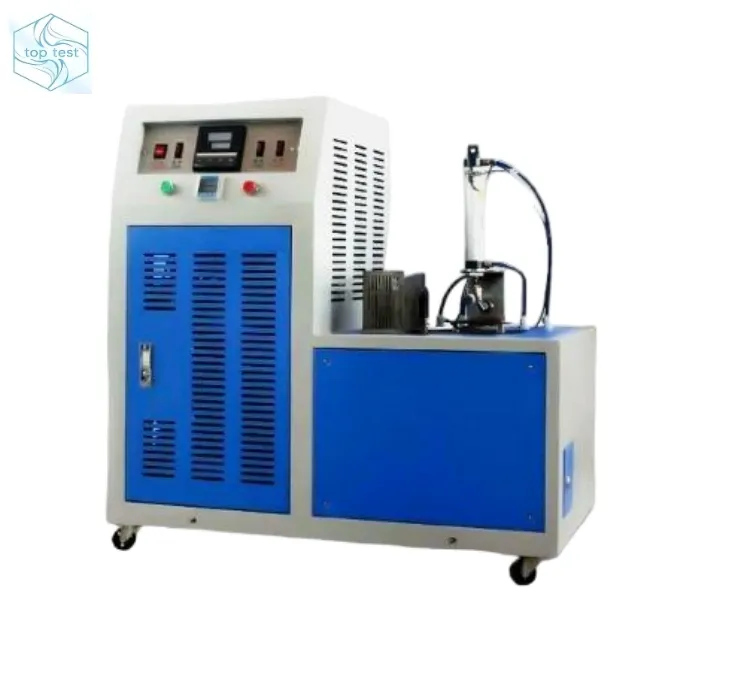
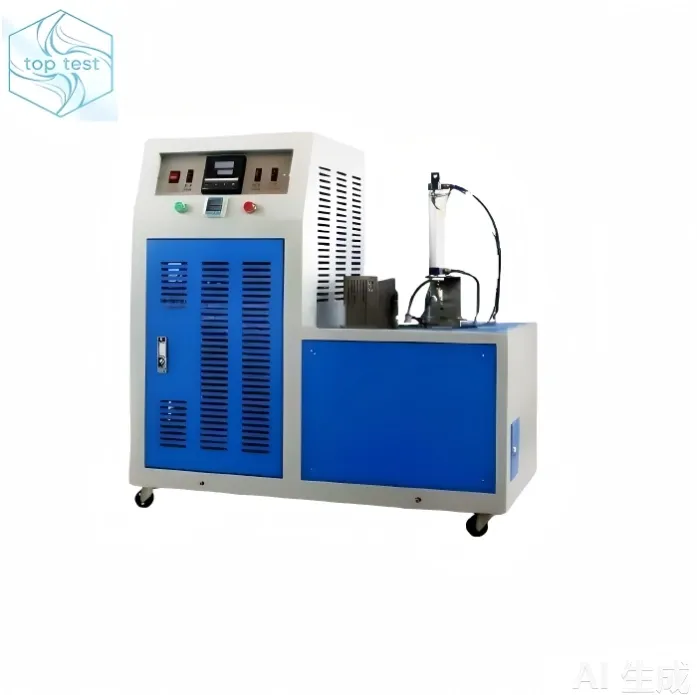
SZTOPTEST Low Temperature Brittleness Tester determines the brittleness temperature of plastics, rubber, and elastomers under low-temperature impact conditions. Featuring a temperature range down to -70°C and ±0.3°C control accuracy, it supports material research, quality inspection, and production control.
Low Temperature Brittleness Tester for Plastics and Rubber
Product Overview
The Low Temperature Brittleness Tester is designed to determine the brittleness temperature of plastics, rubber, and other suitable polymer materials under specified low-temperature impact conditions. It evaluates the temperature at which a specimen exhibits brittle failure, helping manufacturers compare the low-temperature performance of different materials and rubber formulations.
With a temperature range from room temperature to -70°C, temperature control accuracy of ±0.3°C, and a controlled impact mechanism, this tester is suitable for material research, quality inspection, incoming-material testing, and production process control. Its compressor-based refrigeration system does not require external cooling-water circulation, making it convenient for laboratory use.
What Is a Low Temperature Brittleness Test?
Plastics and rubber can lose flexibility and become more susceptible to cracking when exposed to low temperatures. Materials that perform well at room temperature may fracture when subjected to impact under cold conditions.
A low-temperature brittleness test involves conditioning a prepared specimen at a specified temperature and applying a controlled impact. The specimen is then inspected for brittle failure according to the applicable test procedure.
The brittleness temperature provides a useful basis for comparing different materials and formulations. In general, a lower brittleness temperature indicates better resistance to brittle failure at low temperatures under comparable test conditions.
However, the brittleness temperature should not be regarded as the guaranteed minimum service temperature of a finished product. Actual performance also depends on material formulation, specimen geometry, impact conditions, and the intended application.
Key Features and Advantages
1. Low-Temperature Testing Down to -70°C
The tester provides a temperature range from room temperature to -70°C, supporting low-temperature brittleness evaluation for suitable plastics, rubber, and elastomer specimens.
2. Stable Temperature Control
With temperature control accuracy of ±0.3°C, the equipment helps maintain consistent test conditions during specimen conditioning.
3. Controlled Impact Mechanism
The dedicated impact device uses a specified impact weight and working stroke to apply an impact to the conditioned specimen. The clamping and impact structures are designed to maintain the required specimen position.
4. Compressor-Based Refrigeration
The tester uses a compressor-based direct refrigeration system and does not require external cooling-water circulation. This simplifies installation and reduces the need for additional cooling-water equipment.
5. Digital Timing Control
The built-in digital timer supports a setting range of 0–99 minutes with a resolution of 1 second, helping operators control the specimen conditioning period.
6. Compact Laboratory Design
With overall dimensions of 900 × 500 × 800 mm, the tester is suitable for material testing laboratories, quality-control departments, and manufacturing facilities.
Technical Specifications
Parameter | Specification |
|---|---|
Temperature Range | Room Temperature to -70°C |
Ambient Temperature Requirement | ≤25°C |
Temperature Control Accuracy | ±0.3°C |
Cooling Rate, 0°C to -30°C | Approx. 2.5°C/min |
Cooling Rate, -30°C to -40°C | Approx. 2.0°C/min |
Cooling Rate, -40°C to -60°C | Approx. 1.8°C/min |
Cooling Rate, -60°C to -70°C | Approx. 1.6°C/min |
Effective Working Space | 160 × 160 × 120 mm |
Specimen Capacity | 1 specimen |
Digital Timer | 0–99 minutes |
Timer Resolution | 1 second |
Cooling Medium | Industrial ethanol or other suitable antifreeze liquid |
Agitation Motor Power | 8 W |
Power Supply | 220–240 V, 50 Hz |
Rated Power | 2.2 kW |
Overall Dimensions | 900 × 500 × 800 mm (L × W × H) |
Note: Cooling rates are approximate and may vary with ambient conditions, initial temperature, and operating conditions.
Structure and Working Principle
Lifting Specimen Clamp
The lifting clamp consists of a cylinder, cylinder base, and specimen holder. It positions the specimen for impact testing.
The distance from the specimen impact point to the lower end of the clamp is 11.0 ± 0.5 mm.
Impact Device
The impact device consists of an impactor and an impact cylinder. It applies a controlled impact to the conditioned specimen.
The principal mechanical parameters are:
- Impactor weight: 200 ± 20 g
- Working stroke: 40 ± 1 mm
- Distance between the impactor tip and specimen in the reset position: 25 ± 1 mm
These dimensions help establish the specified impact conditions. The exact test setup should be confirmed against the applicable test method.
Refrigeration System
The equipment uses a compressor-based direct refrigeration system with industrial ethanol or another suitable antifreeze liquid as the cooling medium. External cooling-water circulation is not required.
The specified cooling rates are approximately 2.5°C/min from 0°C to -30°C, 2.0°C/min from -30°C to -40°C, 1.8°C/min from -40°C to -60°C, and 1.6°C/min from -60°C to -70°C.
For applications requiring broader environmental conditioning, a High and Low Temperature Test Chamber can be used for complementary temperature testing of materials and products.
Applicable Standards
The following international standards are relevant to low-temperature brittleness testing, depending on the material and test procedure:
- ASTM D746 — Standard Test Method for Brittleness Temperature of Plastics and Elastomers by Impact.
- ISO 812 — Rubber, vulcanized or thermoplastic — Determination of low-temperature brittleness.
- ASTM D2137 — Standard Test Methods for Rubber Property—Brittleness Point of Flexible Polymers and Coated Fabrics.
- ISO 974 — Plastics — Determination of brittleness temperature by impact.
The applicable standard, specimen geometry, conditioning requirements, impact configuration, and result evaluation method must be confirmed before testing. The equipment configuration should be verified against the customer's required procedure; compliance with a standard should not be assumed solely from the temperature range or impact mechanism.
Applications and Industries
The Low Temperature Brittleness Tester is suitable for evaluating the low-temperature impact behavior of compatible polymer specimens in a variety of industries.
Rubber Manufacturing
Rubber manufacturers use brittleness testing to compare different rubber compounds, evaluate formulation changes, support quality control, and investigate low-temperature material failures.
For complementary durability evaluation, an Ozone Aging Test Chamber for Rubber can assess the resistance of rubber materials to ozone-induced cracking.
Plastics Manufacturing
The tester helps evaluate the tendency of plastic materials to become brittle under cold conditions. It can support material selection, product development, incoming-material inspection, and production quality control.
Automotive Industry
Potential test materials include rubber seals, gaskets, hoses, cable jackets, plastic housings, and other polymer components that may be exposed to low temperatures during storage or vehicle operation.
Wire and Cable Industry
Cable insulation and outer sheaths made from suitable polymer materials may be evaluated for low-temperature brittleness, helping manufacturers assess their resistance to cracking under specified impact conditions.
Research and Quality-Control Laboratories
The tester is useful for comparing material formulations, evaluating changes in material properties, and generating test data for internal specifications and product development.
Specimen Requirements
For the specified test configuration, specimens should have the following dimensions:
Parameter | Requirement |
|---|---|
Length | 25.0 ± 0.5 mm |
Width | 6.0 ± 0.5 mm |
Thickness | 2.0 ± 0.3 mm |
Surface Condition | Smooth and free from foreign matter or visible damage |
Finished products should be appropriately prepared by cutting or grinding to obtain the required specimen dimensions. Specimen preparation must avoid introducing cracks, notches, excessive heat, or other damage that could affect the results.
Always confirm specimen dimensions and preparation requirements against the specific standard and procedure being followed.
Test Procedure
A typical low-temperature brittleness test follows these steps:
- Specimen preparation: Prepare the specimens to the required dimensions and inspect their surfaces.
- Temperature conditioning: Place the specimen in the cooling medium and allow it to reach the specified test temperature.
- Conditioning period: Maintain the specimen under the required temperature and timing conditions.
- Impact testing: Apply the impact using the specified impact mechanism and specimen positioning.
- Failure inspection: Examine the specimen for cracking, fracture, or other defined evidence of brittle failure.
- Result evaluation: Record the outcome and determine the brittleness temperature according to the applicable test method.
The exact conditioning period, number of specimens, temperature intervals, and result calculation depend on the applicable standard. This model has a stated capacity of one specimen, so testing throughput should be considered when planning a test program.
Complementary Material Testing Equipment
Low-temperature brittleness is only one aspect of polymer performance. Manufacturers may also need to evaluate tensile strength, elongation, compression, tear resistance, or other mechanical properties.
A High & Low Temperature Universal Tensile Testing Machine can evaluate mechanical properties under controlled temperature conditions, subject to the machine configuration and applicable test method.
For broader mechanical characterization at standard laboratory conditions, a Universal Tensile Testing Machine can support tensile, compression, bending, shear, peel, and tear testing of suitable materials.
These tests complement low-temperature brittleness evaluation but measure different properties and should not be treated as interchangeable methods.
Why Is Low-Temperature Brittleness Testing Important?
Low-temperature brittleness testing helps manufacturers understand how polymer materials respond to impact in cold environments. It can support:
- Material selection and formulation comparison
- Incoming-material quality inspection
- Production process control
- Research and product development
- Failure investigation
- Verification against material specifications
- Evaluation of suitability for cold-weather applications
By testing specimens under controlled conditions, manufacturers can compare materials more consistently and make better-informed decisions about material performance.
Request a Quote
Looking for a low-temperature brittleness tester for plastic or rubber testing?
Contact SZTOPTEST with your material type, required test standard, target temperature, specimen dimensions, and testing requirements. Our team can help confirm whether this configuration is suitable for your application and advise on the appropriate equipment setup.
Contact us for technical details, customization options, and a quotation.