
Mechanical Testing Equipment
100kN Tensile Tesing Machine ASTM D882
A tensile testing machine is a precision device designed to test the tensile, peel and tear strength of materials like film, tape, paper and textiles. It features stable mechanical transmission, high accuracy and easy operation, fully complying with international standards such as ASTM D882, ISO 527, and GB/T 1040 to provide reliable test data. Compact in structure, it is ideal for laboratories, small workshops and quality inspection departments, offering cost-effective and durable solutions for global material testing needs.
Single Column Tensile Testing Machine
Overview
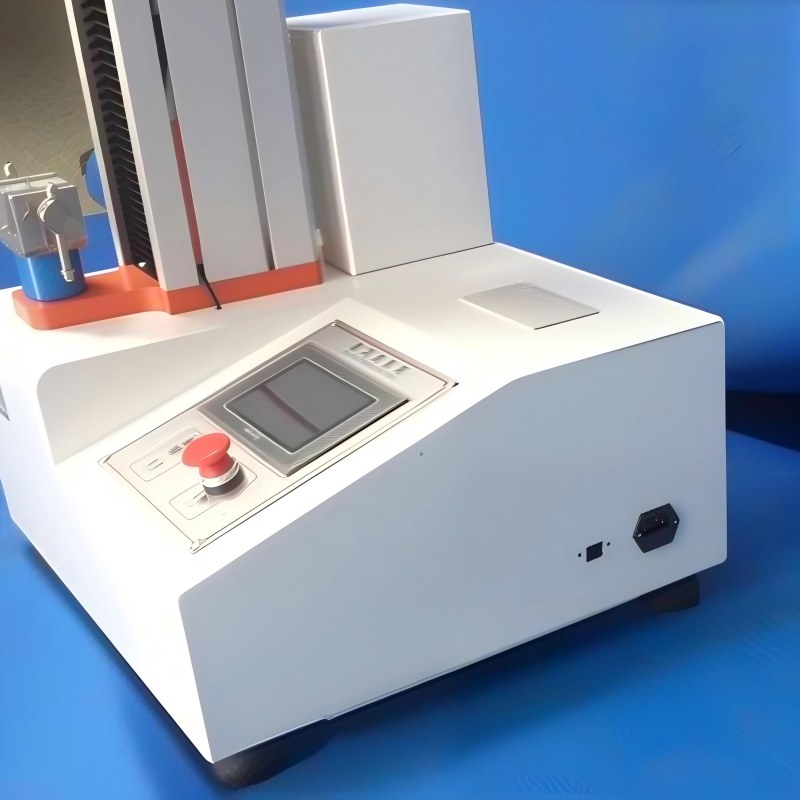
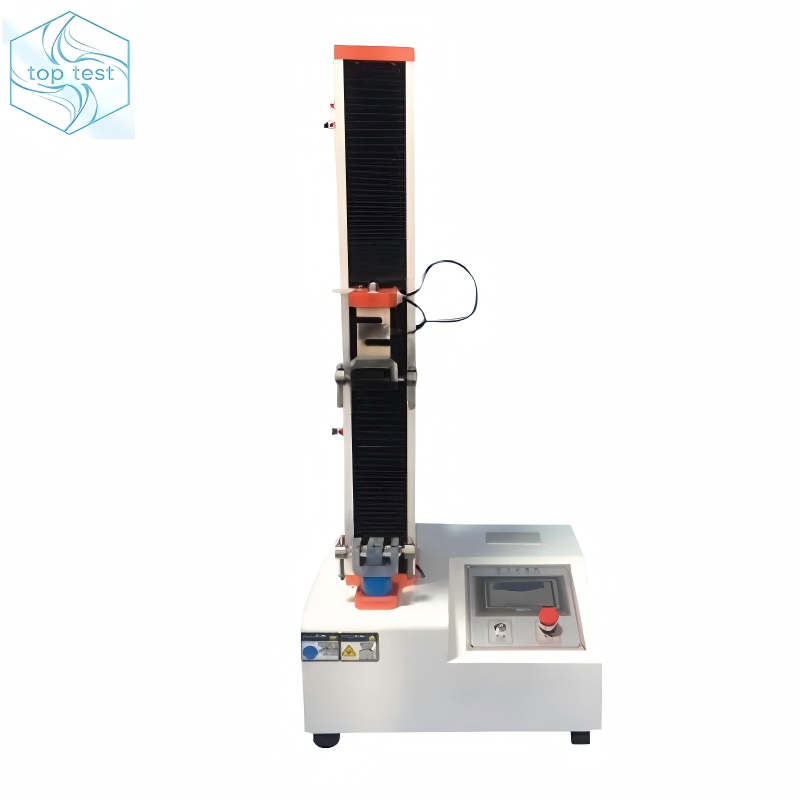
Our single column tensile testing machine is a high-precision, cost-effective desktop tensile tester for low to medium force testing. It integrates advanced electronic technology and stable mechanical transmission, providing reliable test results for various materials. Compact and easy to operate, this single column tensile tester saves more space than double column tensile testing machines, making it ideal for laboratories, small workshops and quality inspection departments. It can meet diverse testing needs (tensile, peel, tear) with stable performance. As a professional tensile testing machine manufacturer, we optimize our desktop tensile tester to serve global material testing customers.
Standard
Our single column tensile testing machine strictly complies with international standards, ensuring accurate and globally recognized test results. It is compatible with the following standards (including but not limited to):
- Tensile Test: ASTM D882 (plastic film), ASTM D638 (plastics), ISO 527-1/-2 (plastics), GB/T 1040
- Peel Test: ASTM D3330 (tape peel), PSTC-7, GB/T 2792
- Tear Test: ASTM D624 (rubber), ASTM D1938 (plastic film), GB/T 16578
- Bend Test: ISO 178, ASTM D790
- Compression Test: ASTM D695, ISO 604
- Other Standards: GB/T 12914 (paper), GB/T 3923 (textile), DIN standards
These standards ensure credible data support for your quality control and R&D, helping you meet global market access requirements.
Features and Advantage
Our single column tensile testing machine has obvious advantages for global buyers:
- Compact & Space-Saving: Single column structure, small footprint (55×42×135cm) and light weight, more space-saving than double column tensile testing machines, easy to place and move.
- High Precision & Stability: Equipped with high-quality Chinese brand load cell (resolution 1/100,000) and precision ball screw, load precision ≤1%, with stable servo motor to reduce mechanical errors.
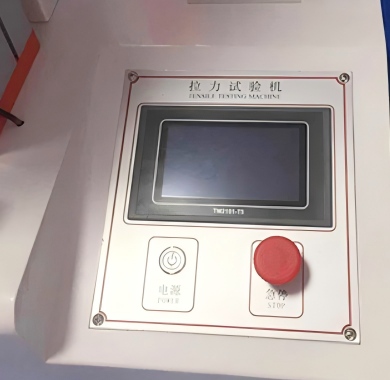
- Easy Operation: Computer-controlled with TM2101 software (Windows 7 compatible) and touch screen, supporting parameter setting, real-time data monitoring and automatic report generation, easy to get started.
- Cost-Effective & Durable: High performance with reasonable pricing, suitable for SMEs and laboratories, made of high-quality materials with low maintenance cost.
- Safe & Reliable: Equipped with E-Stop, overload protection, upper/lower limit switches and automatic retreat function, ensuring operator and machine safety.
Technical Paras(customizable):
Item | Description |
Max. Force | 50N~5KN (optional, low to medium force) |
Load Cell | China brand, resolution 1/100,000, high sensitivity |
Control System | PC (Windows 7) + TM2101 software, computer controlled |
Motor | Adjustable-speed servo motor + reduction box, precision ball screw |
Force Reading | kgf, Ibf, N, KN, T (free to switch) |
Stroke | 900mm (including fixture), customizable |
Load Precision | ≤1% |
Test Speed | 50~300mm/min (adjustable), 0.001~500mm/min (optional) |
Curves Display | Load-elongation, Elongation-time, Time-elongation, Stress-strain |
Data Display | Max. force, speed, sample info, strength (Kpa, Mpa, etc.) |
Safety Features | E-Stop, overload protection, upper/lower limit switches, automatic retreat |
Dimension | 55×42×135cm (standard), light weight |
Function and Application
Our single column tensile testing machine integrates multiple test functions and is widely used in various industries, providing comprehensive material testing solutions.
Testing Functions
- Tensile Test: Tensile strength, breaking elongation, yield strength, elastic modulus
- Peel Test: 90°/180°/T-type peel strength for tape, adhesive products
- Tear Test: Tear strength for plastic film, rubber, textiles, paper
- Bend Test: Bend strength and modulus for plastic, small metal parts
- Compression Test: Compression strength for plastic, paper, small parts
- Other Functions: Fixed load/deformation test, automatic data analysis and report generation
Application Fields
- Packaging Industry: Plastic film, composite film, packaging bags (tensile/peel/tear test)
- Adhesive Products: Tape, double-sided tape, labels (peel strength, adhesion)
- Paper Industry: Paper, cardboard, carton (tensile/tear strength)
- Plastic & Rubber: Plastic sheets, rubber products (tensile strength, elongation)
- Textile & Leather: Fabrics, non-woven fabrics (tensile/tear strength)
- Electronic & Cable: Wires, cables, electronic accessories (tensile, insulation peel)
- Laboratories & R&D: Material research and quality inspection
- Other Industries: Small hardware, metal sheets, automotive interior parts
As a professional single column tensile testing machine supplier, we provide high-quality products and after-sales service. Contact us for customized specifications or further questions about the desktop tensile tester.
Frequently Asked Questions (FAQ)
- Q: What’s the load cell calibration cycle?
- A: Recommend calibration every 12 months to ensure ≤1% load precision; we provide calibration guidance/service.
- Q: Can test speed be customized?
- A: Yes. Standard 50~300mm/min (adjustable); customizable to 0.001~500mm/min for high-precision needs.
- Q: What to do if overload occurs?
- A: The machine stops automatically and alarms. Reduce force setting, check sample clamping, then restart.
- Q: Can stroke be customized?
- A: Yes. Standard 900mm (including fixture); customizable for different sample lengths.
Tensile Tester vs Universal Tensile Tester
- Q: What’s the difference between tensile testing machine and UTM?
- A: Tensile tester (e.g., our single column model) only does tensile/peel/tear tests; UTM is multi-functional (tensile, compression, bending, shear).
- Q: Which is more cost-effective?
- A: Tensile tester is cheaper, low-maintenance, suitable for single test needs; UTM is more expensive but for diverse tests.
- Q: Do both have the same precision?
- A: Tensile tester (≤1%) is optimized for tensile; UTM (0.5~1%) is for multi-tests, less adaptive for single tensile.